
Structural Repair
Stabilizing Walls and Footings That Have Moved
Seeing a bowing basement wall, a dropped corner or cracks that keep growing? Call us and request a free estimate.
- Basements, slabs and crawl spaces
- Written estimate before work
- Drainage checked on every visit
Get your free estimate
Tell us what's going on. We call you back fast.
How Front Range Soils Move Foundations
Much of the Front Range sits on expansive clay and bentonite-bearing soil from the Pierre Shale. When these soils get wet they swell, and when they dry they shrink. A house in Colorado Springs can ride that cycle for decades, with walls pushed inward, slabs lifted and footings shifted unevenly.
Some neighborhoods have the opposite problem. Collapsible soils can lose volume suddenly when they get soaked for the first time, often from a broken line or heavy irrigation, and a corner of the house drops. Freeze-thaw cycles through the winter add their own stress near the surface.
Structural repair in Colorado Springs means matching the fix to the movement. A wall being pushed in by swelling clay needs a different repair than a footing that is settling. Where the movement is significant, we work with your residential structural engineer, or recommend bringing one in, so the plan rests on a proper evaluation.
Structural Repairs We Provide
These are the main methods used to stop movement and, where possible, recover some of it. Many homes need a combination, and drainage changes usually go along with them.
Steel and concrete piers
Piers transfer the weight of a settling footing to deeper, more stable soil or bedrock. Steel push piers and helical piers are common choices, and the depth needed varies a lot from lot to lot. Piers can stop settlement and sometimes lift the footing back toward its original position.
Wall anchors and steel bracing
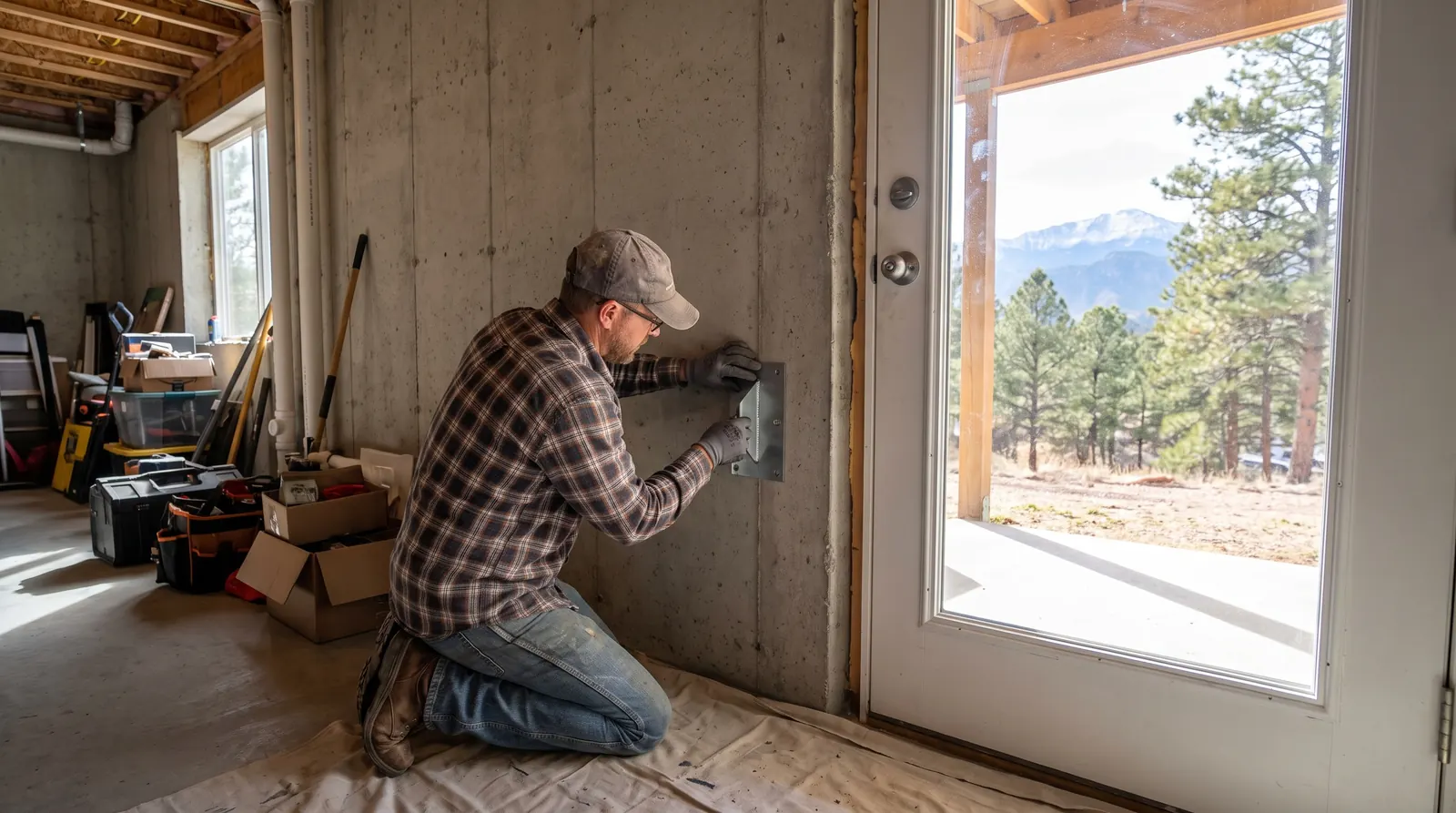
Basement walls bowing inward from soil pressure can be held with wall anchors set into the yard or with steel beams braced from floor to floor framing. Some systems allow gradual tightening to straighten the wall over time.
Carbon fiber wall reinforcement
For walls with limited bowing, carbon fiber straps bonded to the concrete add strength with very little lost space. They are a good fit for finished basements, but they are meant to stop further movement rather than push a wall back.
Floating slab and partition adjustments
Many basements here have floating slabs meant to move with the soil. When interior walls are framed tight to the slab, heaving floors crack drywall and jam doors upstairs. Re-setting the slip gap on partition walls relieves that stress.
Wall rebuilding and footing repair
When a wall has moved too far to brace or a footing has broken, sections may need to be excavated and rebuilt. This work is planned with an engineer and coordinated with the city's permit process.
Pricing
Structural Repair Costs in Colorado Springs
| Repair type | Typical range | What moves the price |
|---|---|---|
| Steel or concrete piers | $1,000 – $3,000 per pier | Depth to stable soil, pier type, access around the house |
| Full pier job | $4,000 – $15,000+ | Number of piers, lifting needed, interior versus exterior |
| Wall anchors or steel bracing | $4,000 – $12,000 | Wall length, amount of bowing, yard access |
| Carbon fiber straps | $400 – $1,000 each | Strap spacing, wall height, surface prep |
| Structural engineer's report | $400 – $1,000 | Paid to the engineer, scope of the evaluation |
These are conservative national planning ranges, not quotes. Soil, depth to bearing, access and the engineer's design all change the final cost. You receive a written estimate with the full scope before work begins.
How it works
Our Structural Repair Process
- 1
Call and describe the damage
Tell us which walls or corners are affected, what cracks you see and whether anything has changed recently, like a new sprinkler system or a plumbing leak.
- 2
Foundation inspection
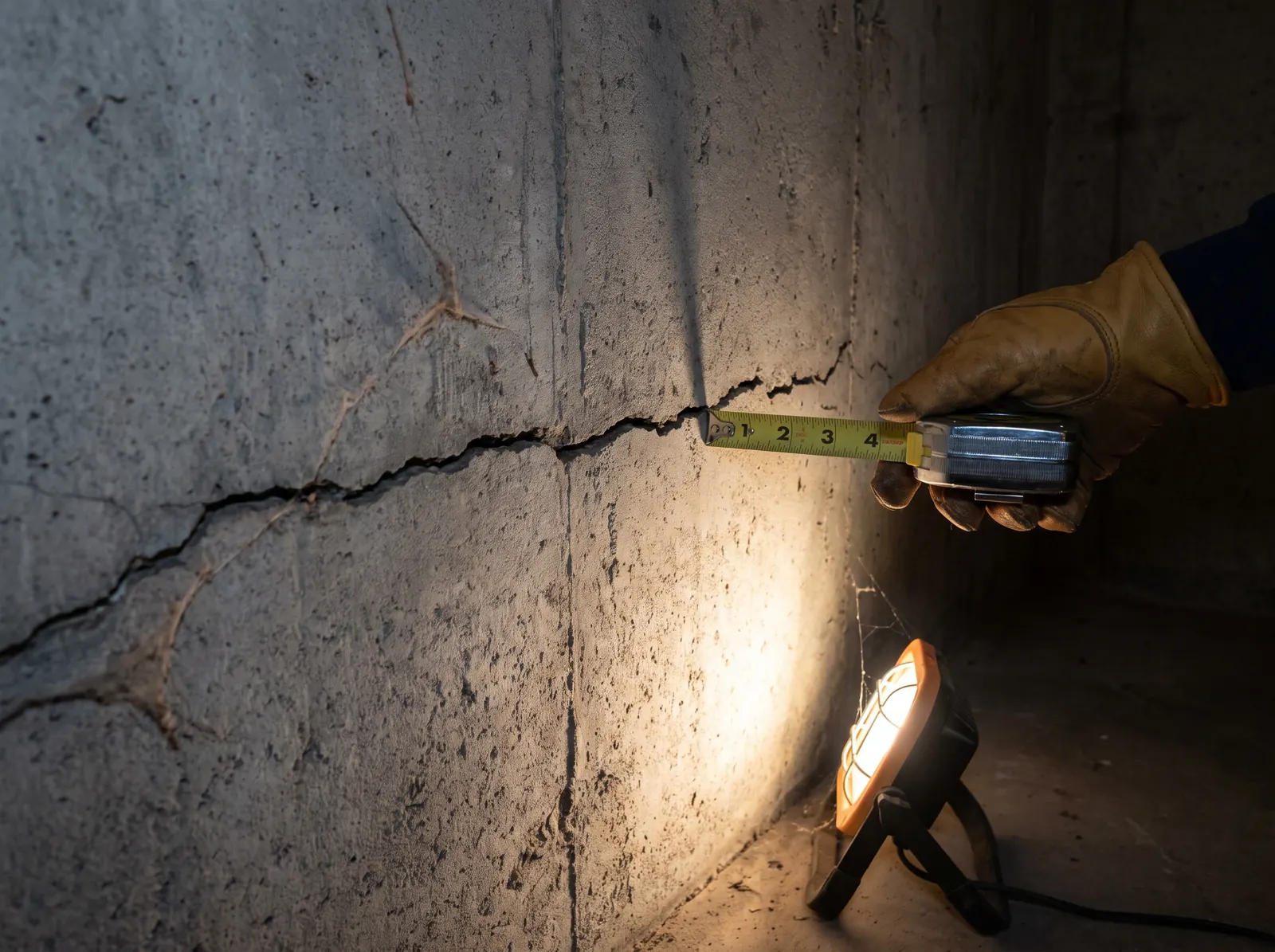
We measure wall deflection and floor elevations, map the cracks and look at drainage around the house.
- 3
Engineering if needed
For larger repairs we recommend an engineer's evaluation and coordinate with them on the repair design.
- 4
Written estimate and approval
You receive a scope listing each pier, anchor or brace and the price. Work starts after you approve it.
- 5
Repair and documentation
We complete the work, record final measurements and give you paperwork to keep for the home's records and any future sale.
Why Choose Us for Structural Repair?
The movement decides the method
We figure out whether your foundation is settling, heaving or being pushed before choosing piers, anchors or bracing.
Engineer involvement when it matters
For significant movement we work alongside your structural engineer, or help you find one, and build the repair to their design.
Drainage in every plan
Structural fixes last longer when the water that drives soil movement is managed, so grading and downspouts are part of the conversation.
Permits and paperwork explained
We tell you which repairs typically need a permit or an engineering letter and how that affects the schedule.
Questions
Structural Repair FAQ
How do I know if my foundation needs structural repair?
Warning signs include basement walls bowing inward, horizontal cracks, stair-step cracks in block, doors and windows that suddenly bind, and gaps opening at ceilings or trim. One crack alone is not always structural, so an inspection with measurements is the best way to know.
Do I need a structural engineer?
For bowing walls, significant settlement or any repair that changes how the house is supported, an engineer's evaluation is a good idea and is often needed for permits. We are a repair contractor, so we work with your engineer or recommend one.
Can a heaving floor be pushed back down?
Usually not. Swelling clay lifts slabs with great force. The practical fixes are managing moisture, relieving stress on walls framed to the slab and, in some cases, replacing the slab with a structural floor.
Will piers lift my house back to level?
Piers can often recover some of the settlement, but not always all of it. Lifting too far can crack finishes, so the goal is stability first, with lift only as far as the house safely allows.
Structural Repair Across Colorado
We handle structural repair in these communities:
Related Services
Need Structural Repair in Colorado Springs?
Worried about a wall that is moving or a corner that has dropped? Call (719) 759-7853 and request a free estimate.