
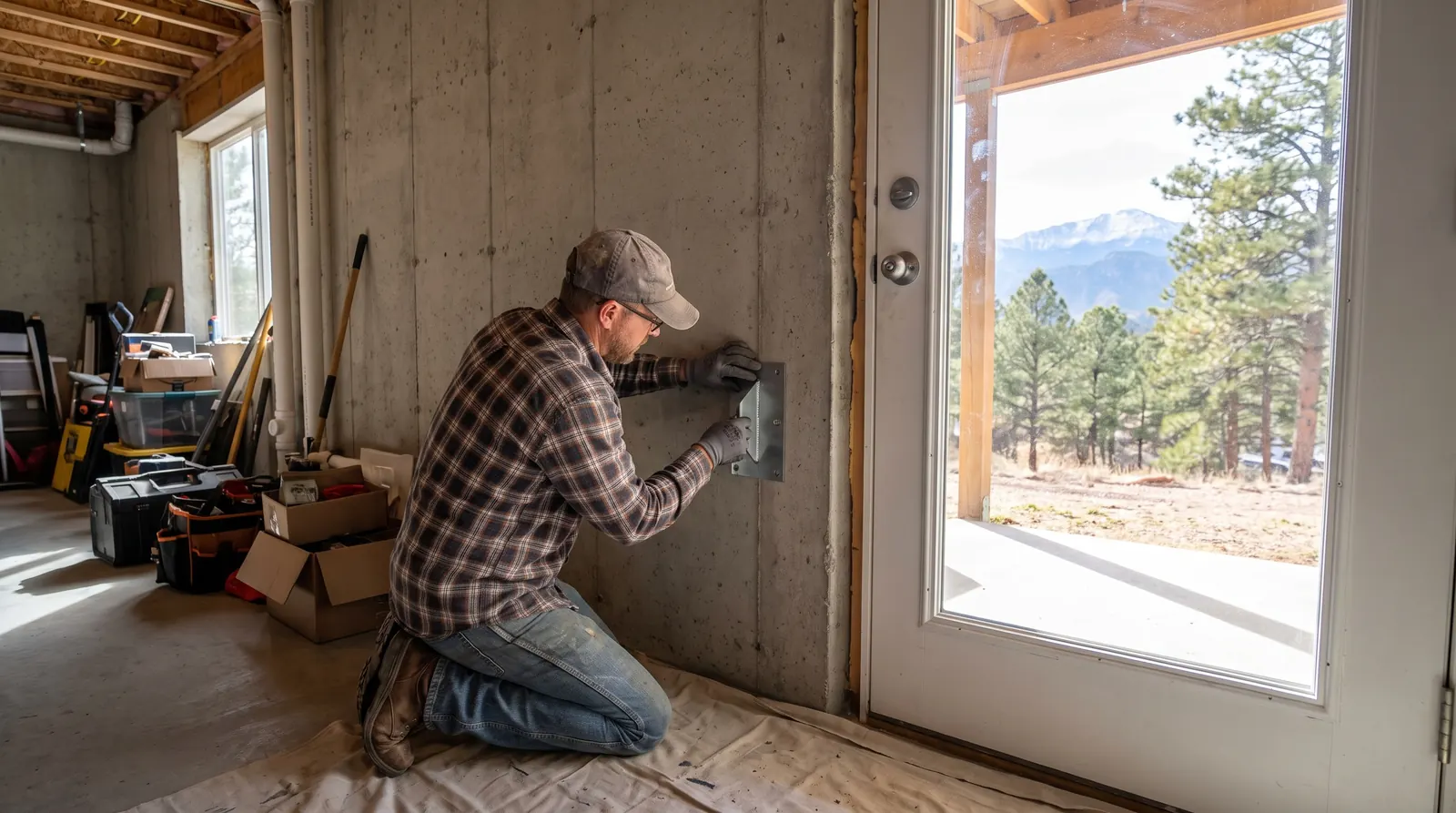
Foundation Crack Repair
Sealing Cracks and Reading What They Tell You
Found a new crack, or an old one that is getting wider or leaking? Call us and request a free estimate.
- Basements, slabs and crawl spaces
- Written estimate before work
- Drainage checked on every visit
Get your free estimate
Tell us what's going on. We call you back fast.
Not Every Foundation Crack Means the Same Thing
Almost every poured concrete wall cracks a little as it cures. Thin vertical hairline cracks are common in basements across Colorado Springs and are often just shrinkage. The question is whether a crack is stable, whether it lets water in, and whether its shape points to the soil moving the wall.
Shape and direction say a lot. Horizontal cracks partway up a basement wall often come from swelling clay pushing inward. Diagonal cracks from window corners or stair-step cracks in block can signal settlement. Cracks that are wider at the top than at the bottom, or that have one side offset from the other, deserve a closer look.
Foundation crack repair in Colorado Springs is about sealing the crack properly and understanding why it formed. A tidy patch on a crack that is still moving will reopen, so we check the pattern before we seal anything and tell you if the crack is part of a bigger problem.
Crack Repair Methods We Use
The repair depends on the crack type, whether it leaks and whether the wall is still moving. These are the methods we use most often.
Polyurethane injection for leaking cracks
Flexible polyurethane is injected through ports along the crack and expands to fill it through the wall's full thickness. Because it stays flexible, it handles the small seasonal movement common on expansive soil and is the usual choice for cracks that let water in.
Epoxy injection for structural bonding
Epoxy bonds the two sides of a crack back together and restores strength to the concrete. It is used on dry, stable cracks where rebuilding that strength matters, not on walls that are still shifting.
Carbon fiber stitching
Short carbon fiber staples or straps across a crack keep it from widening further. Paired with injection, this is a good option for cracks with slight displacement in walls that are otherwise in decent shape.
Slab crack sealing and leveling
Cracks in garage floors, patios and basement slabs can be routed and sealed. Where one side has dropped, mudjacking or polyurethane foam leveling can lift the slab back into line before sealing.
Crack monitoring
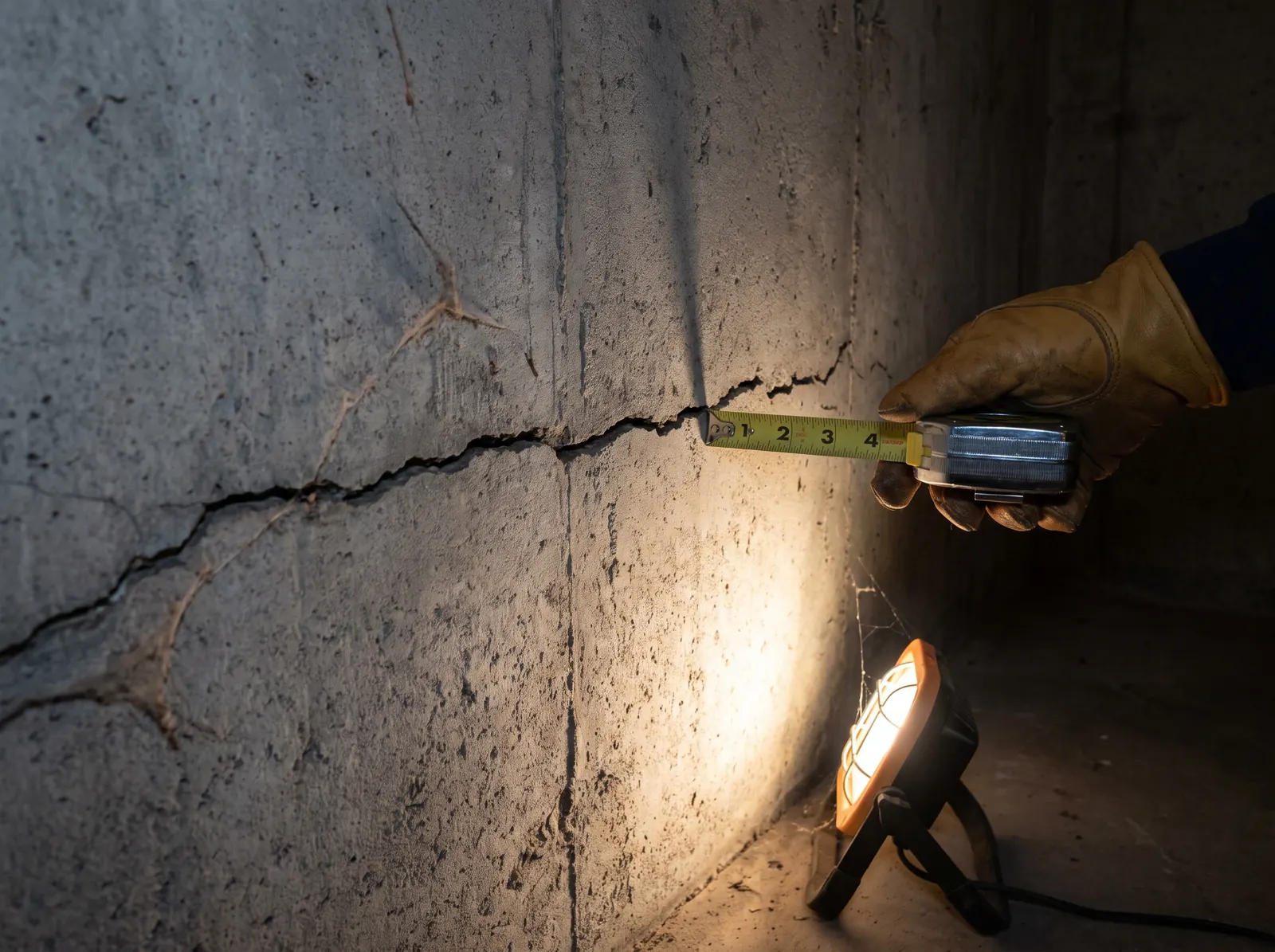
For cracks that might still be active, we can mark and measure them so you can see whether they change over a season. This helps decide between a simple seal and structural work.
Pricing
Foundation Crack Repair Costs in Colorado Springs
| Repair type | Typical range | What moves the price |
|---|---|---|
| Crack sealing or injection | $250 – $800 per crack | Crack length, wall thickness, finished walls in the way |
| Carbon fiber straps across a crack | $400 – $1,000 each | Number of straps, wall height, surface prep |
| Slab mudjacking or foam leveling | $500 – $2,500 | Slab size, how far it dropped, access |
| Structural engineer's report | $400 – $1,000 | Paid to the engineer, scope of the evaluation |
These figures are national planning ranges, not quotes. The number of cracks, access behind finishes and whether the wall is still moving all affect the price. You get a written estimate before we start.
How it works
Steps in a Crack Repair
- 1
Call and describe the crack
Tell us where it is, how long and wide it looks, and whether it leaks. A photo with a coin or tape measure for scale is very helpful.
- 2
Inspect and measure
We measure width and offset, check the rest of the wall and slab, and look at grading and gutters nearby.
- 3
Recommend a repair
We explain whether the crack is cosmetic, a water problem or a sign of movement, and which method fits.
- 4
Written estimate and approval
The repair, materials and price are in writing. We schedule the work once you approve.
- 5
Seal and check
After injection or stitching we check the repair and tell you how to watch it through the next wet season.
Why Choose Us for Foundation Crack Repair?
Cause before cosmetics
We look at the pattern of cracks across the wall and slab first, so you are not paying to seal a symptom of ongoing movement.
Right material for the crack
Leaking cracks get flexible injection, stable structural cracks get epoxy, and we explain which one fits and why.
Honest when it is minor
Plenty of hairline cracks only need monitoring or a simple seal. If yours is one of them, we say so.
Tidy work in finished spaces
When drywall or framing has to be opened to reach a crack, we keep the opening small and tell you what needs patching afterward.
Questions
Foundation Crack Repair FAQ
Is a hairline crack in my basement wall a problem?
Many hairline vertical cracks are from concrete shrinkage and are not structural. They are worth sealing if they leak and worth watching if they grow. A crack that widens, turns horizontal or shows offset should be inspected.
Can I seal a foundation crack myself?
Surface caulk and hydraulic cement from the store often fail because they only fill the face of the crack. Injection fills the full depth of the wall. More importantly, a DIY patch can hide signs of movement you would want to know about.
Why do cracks keep coming back after they are patched?
A crack that reopens is usually still moving, often because clay soil is swelling and shrinking with moisture. In that case the soil, drainage or wall needs attention, not just another patch.
Are horizontal cracks worse than vertical ones?
Generally yes. A horizontal crack in a basement wall often means soil pressure is pushing the wall inward, which can lead to bowing. That calls for a structural assessment rather than sealing alone.
Foundation Crack Repair Across Colorado
We handle foundation crack repair in these communities:
Related Services
Need Foundation Crack Repair in Colorado Springs?
Not sure whether that crack is cosmetic or something more? Call (719) 759-7853 and request a free estimate.